

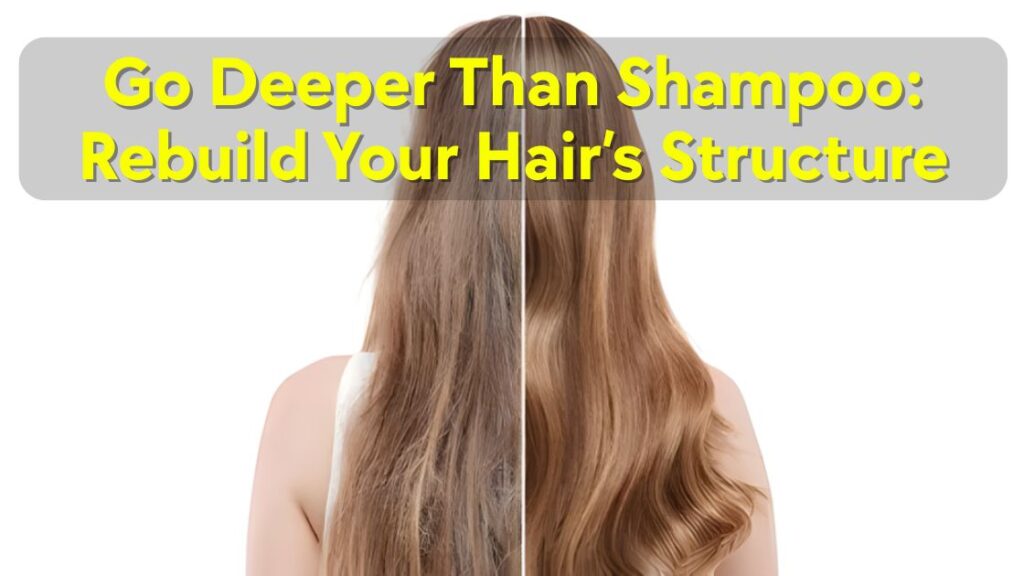
If your hair is looking lifeless, brittle, breaking off, or the ends just feel straw-like, you probably think, “Maybe I need a new shampoo”. I used to think the same. But then I learned something: it’s not just what’s on the surface. It’s what’s inside the hair fibre, the bonds that matter. And fixing those bonds is what’s really going to bring your hair back to life.
This isn’t about adding another layer of product. It’s about going deeper than shampoo. Let’s talk about why, how, and what you can do like a friend who’s been there.
What Are Hair “Bonds” & Why They Matter
Your hair isn’t just a strand of colour and shine. On a microscopic level, it’s made up of keratin proteins held together by different types of chemical bonds: particularly disulfide bonds, but also hydrogen and ionic (salt) bonds. These bonds give hair its strength, shape, elasticity and texture.
When you bleach, dye, heat-style, tightly tie your hair or expose it to pollution and sun, you are breaking those bonds. When the structural framework starts weakening, you get frizz, breakage, dullness, split ends, and full frustration.
So yes, shampoo removes dirt, oil, and product buildup. But it doesn’t rebuild bonds. That’s why a routine that stops at “just shampoo + condition” often doesn’t fix the underlying problem.
Why This Trend Is Big Right Now
Bond-repair treatments (also called “bond builders” or “bond-repair systems”) are becoming huge in hair care. Industry experts say they are the key to reviving damaged hair from chemical treatments, heat styling, and environmental stress.
For example:
- One article says: “Bond-builders … benefit nearly anyone, especially those who colour, bleach, or apply heat to their hair.”
- Another says: “Bond repair treatments work to restore those broken bonds by penetrating the hair fibres”.
In short, this is the hair-care equivalent of fixing the foundation, not just painting the walls.
How Bond Repair Works (In Plain Terms)
Let’s walk through what’s actually happening inside your strand:
- Damage → chemical/heat/physical stress breaks the bonds (especially disulfide bonds) inside the hair cortex.
- Bond-repair treatments contain special ingredients (e.g., bis-aminopropyl diglycol dimaleate, citric acid repair complexes) that aim to reconnect or stabilise these bonds.
- As a result: hair gets stronger, more elastic, less prone to breakage; outer surface smoother; ends less frayed.
Think of your hair like a rope made of many threads. If the threads are broken, the rope frays. So you need a repair that goes into the rope, into the core, not just a coating on the surface.
When Your Hair Really Needs Bond Repair
Since I’ve been down the hair-drama route, here are the signs that tell me you’re not just normal dry hair, you might need bond repair.
- Your hair feels mushy or gummy when wet, then snaps when dry. (Loss of elasticity)
- Ends feel straw-like, brittle, matte despite effort.
- You’ve used heat tools regularly (straightener, curling wand) or frequent chemical services (colouring, bleaching, perms).
- You see split ends quickly after a trim, or hair shedding/breakage more than usual.
- Your hair washing or conditioning routine hasn’t improved things much in weeks.
If that’s you, then yes, time to go a layer deeper.
What A Bond-Repair Routine Might Look Like
You won’t fix everything overnight (hair takes time). But here’s a routine you can start with, one I tried that made a difference.
Step 1: Cleanse with care
Use a gentle cleanser or shampoo that doesn’t strip your hair completely. Make sure it prepares the hair for repair; it doesn’t undo it. Some bond systems recommend a bond-repair shampoo with specific chemistry.
Step 2: Pre-treatment or mask (1-2 times a week)
This is your deeper repair phase. On damp hair, apply a treatment designed to reconstruct bonds and leave for the instructed time (5-20 minutes), depending on the product.
Step 3: Bond-repair conditioner/leave-in
After the mask (or alternate), use a conditioner or leave-in with supporting bond-repair or strengthening ingredients. Focus on mid-length to ends. Avoid overloading the scalp.
Step 4: Protective styling & gentle habits
- Limit heat styling when possible.
- Use heat protectant when you do.
- Don’t brush aggressively or towel-dry roughly.
- Trim split ends proactively.
- Consider using a protective overnight style/cap.
Step 5: Maintenance and prevention
Once you’re seeing improvement, you don’t necessarily need the heavy mask weekly. Use the repair treatment every 1-2 weeks or when hair is stressed. Monitor how your hair feels. Many experts caution that overuse can lead to other issues (protein overload, etc.).
Real Talk: My Hair Repair Journey
I’ll be honest, I once ignored this and paid the price. I bleached my hair twice in a span of months (yes, cringe) and naively thought more conditioner and oil would fix it. Nope. Ends snapped. Hair looked lifeless.
Then I tried a bond-repair focused mask every week, switched to a shampoo + conditioner designed for repair, and reduced heat-tool use. After about 6-8 weeks, hair felt stronger, less breakage, and more shine. Was it perfect? No. But definitely better. And I felt my hair was repairing, not just “coated”.
If you’re willing to invest a little time and consistency, the improvement shows.
FAQs (People Also Ask)
- Does bond repair work for all hair types?
Yes, while especially useful for damaged/processed hair, even “virgin” hair can benefit from bond-repair as a preventive measure. - How often should I use bond-repair treatments?
It depends on the damage level. Some 1-2 times a week for severely damaged hair; once every 1-2 weeks for maintenance. Overuse can backfire (protein overload), so monitor your hair. - Is it better than just a deep conditioner or mask?
Yes, because bond repair goes beyond surface smoothing and targets internal structure. Deep conditioners help, but bond repair targets broken chemical bonds. - Can you repair all the damage with bond builders?
Not always completely. Some damage is irreversible (especially extremely over-processed hair). Bond builders help significantly, but you may still need trims or professional help. - Do I still need to protect my hair if I use bond repair?
Absolutely. Repair is great, but preventing further damage (from heat, chemicals, or rough handling) is essential. Bond repair won’t stop fresh damage on its own. - Are these treatments expensive?
They can be costlier than standard conditioners/masks. But you don’t need to use them forever; once hair improves, you can switch to simpler maintenance. Value often comes from fewer breakages and less trimming.
What to Do (If You’re Starting Today)
- Pick one bond-repair product (mask or treatment) and commit to it for 6-8 weeks.
- Be patient, structure takes time to rebuild.
- Be gentle to your hair during this period: reduce heat, stop harsh chemical treatments if possible, and detangle carefully.
- Keep expectations realistic: hair will improve, but if damage is severe, it may not revert to its ‘virgin’ state overnight.
- Watch how your hair responds: stronger, less breakage, better texture = you’re doing good. If hair becomes stiff or brittle, reduce frequency.
Conclusion
If your hair is telling you something (breakage, dryness, limpness, ends that hate you), listen. Your shampoo routine might be just scratching the surface. The real game-changer is repairing the bonds inside your hair, rebuilding strength, elasticity and resilience from within. Go deeper than “wash + condition”. Give your hair the structural care it deserves. Your hair will thank you with shine, bounce and fewer “why does this happen to me” mornings.
TL;DR Summary Box
- Hair’s internal bonds (disulfide, hydrogen, ionic) give it strength, shape & resilience.
- Damage from heat, chemicals, and rough handling breaks those bonds → weaker, brittle hair.
- Bond-repair treatments work deeper than surface care, aiming to rebuild internal structure.
- Signs you need it: lots of breakage, straw-feel, multiple chemical/heat services, repeated damage.
- Routine: gentle shampoo, regular bond-repair mask/treatment, conditioner/leave-in, preventive care.
- Prevention still matters: heat protect, limit harsh treatments, and handle hair gently.
- Maintenance: Once hair improves, you can space out heavy repair treatments.


