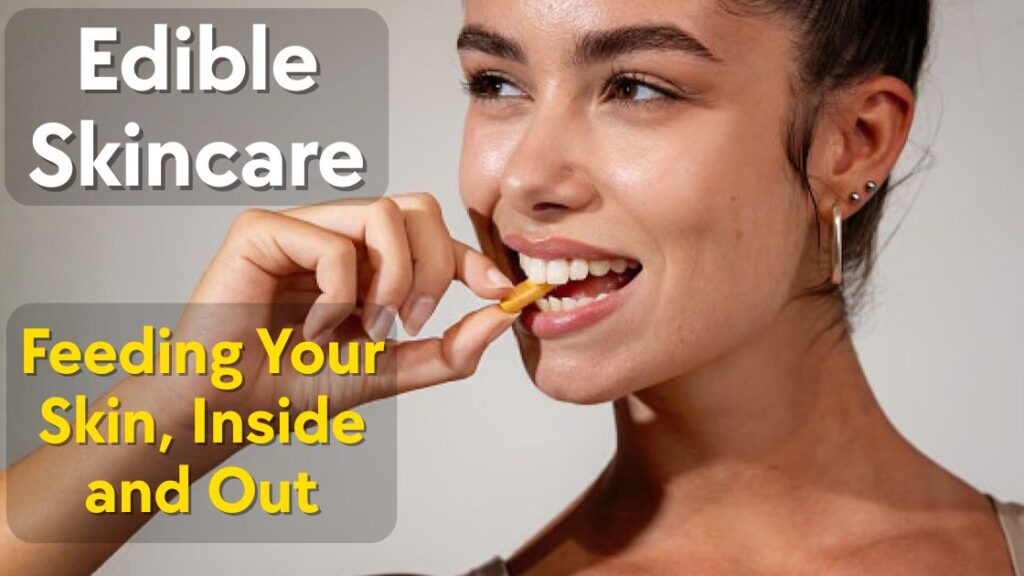
I’ll admit, when I first heard “skincare you can eat,” I was sceptical. Did someone swap the face wash and cookie? But over the last few years, that idea has quietly grown from a niche experiment into a real trend. Beauty brands are weaving food, supplements, and edible formats into skincare. And consumers are curious (and a bit hungry).
In this post, we’ll walk through what edible beauty means, why it’s getting traction now, the science behind it (when it works, when it doesn’t), consumer risks, and how you can decide what’s worth trying. I’ll also share my own experiments (and flops) with “eating my skincare.” Think of it like a friend guiding you through a weird but fascinating forest, not preaching, just exploring together.
What is edible beauty (or “foodable ingredients”)?
“Edible beauty” is a broad umbrella. It includes:
- Nutricosmetics / ingestibles: supplements, gummies, powders meant to support skin, hair, nails
- Food-grade topical ingredients: using ingredients common in food (fruit extracts, oils, botanical oils) in skincare formulations
- Edible packaging/film formats: packaging or encapsulation that could, in some cases, be edible (or at least compostable / food-safe)
- “Snackable” beauty foods: bars, drinks, powders marketed with beauty claims (skin glow, collagen, etc.)
In short: beauty and skincare that borrows heavily from food science, often with the ambition that what’s safe to ingest should be safer to put on skin, or that internal + external support can amplify results.
There is evolving academic interest: one review describes edible cosmetics as using food co-products or by-products, food-grade raw materials, and even edible packaging to close loops in sustainability.
Another research article highlights that food-derived ingredients may be promising to combat skin ageing.
But “edible beauty” is still newer, experimental, and not all claims hold water.
Why is this trend growing now?
There’s a confluence of cultural, scientific, and marketing forces pushing edible beauty forward:
- Consumer demand for transparency & simplicity
People want to see ingredients they recognise. Food-based formulas feel more “real” than long chemical names. Brands are responding.
- Wellness + beauty merge
The line between “health product” and “beauty product” is blurring. Skin is increasingly seen as part of overall wellness, not just the surface.
- Rise of edible/functional foods
Beauty claims are now common on snack bars, drinks, and supplements. That pushes the idea that what you eat can influence how your skin looks.
- Sustainability & circular economy
Using food by-products, edible packaging, and upcycled ingredients aligns with eco trends.
- Marketing differentiation & novelty
In a crowded skincare space, brands want to stand out. “Eat me” or “skin snack” claims grab attention.
- Science catching up (some of it)
There’s increasing research into how compounds from food (antioxidants, polyphenols, peptides) can help skin.
So it’s part consumer shift, part marketing alchemy, part scientific curiosity.
The science behind food + skin: where it helps & where it doesn’t
Before you go chewing your serums, let’s get real: it’s messy territory. Some claims are promising; others are hype. Here’s what the science suggests so far.
What does seem to work
- Antioxidants & polyphenols
- Many fruits, seeds, and botanicals in food have antioxidant properties. When included in topical or ingestible formulas, they may help reduce oxidative stress, support collagen, and improve skin appearance. Food extracts (e.g. grape seed, green tea, pomegranate) are already common in cosmetics.
- Bioactive peptides & proteins
- Some food-derived proteins/peptides may signal skin repair processes if formulated well and delivered effectively. That’s part of the promise of nutricosmetics.
- Lipids / fatty acids
- Oils and fats found in foods (e.g. omega-3s, seed oils, plant oils) can integrate into skin lipids or support barrier function when used topically or ingested.
- Gut-skin axis
- Eating foods that support gut health (prebiotics, probiotics) can influence systemic inflammation, immune balance, and may reflect in improved skin, a path many edible beauty brands lean on.
Where it’s still unproven/risky
- Dose & bioavailability
- An ingredient may have effects in lab settings, but delivering a clinically effective dose inside or through the skin is hard. Many foods or extracts degrade, are metabolised, or simply don’t reach the target tissue in meaningful amounts.
- Ingredient interaction & stability
- Food-based compounds may degrade, oxidise, or destabilise in formulations. Ensuring shelf stability, safety, and efficacy is challenging.
- Misleading claims / overpromises
- Some edible beauty products make bold claims (e.g. “eat this bar, get perfect skin”) with little or no clinical backing. Regulatory oversight in many places is weaker for “beauty supplements.”
- Safety/irritancy
- Even “natural” food ingredients can be allergenic or irritating in high concentrations or when applied to the skin. For example, essential oils (food-derived) cause sensitivity in many people.
- A clean beauty review cautions that edible or “natural” labels don’t guarantee dermatologic safety.
- Balance & holistic approach matter more
- If you eat a collagen bar but also eat a lot of sugar, smoke, stress, and skip sleep, the benefit may be minimal. Edible beauty is not a standalone fix.
Real-world use & experiments (what happens when you try)
I’ve tried a few “beauty snack / ingestible + topical food-based formula” combos myself. One midwinter, I used a collagen + antioxidant gummy supplement, paired with a topical sheet mask rich in berry extract, for 4 weeks. I saw mild improvements in glow (maybe subtle), but the real difference was how consistent I was with hydration & barrier care during that time (I likely over-attributed).
In another case, I tested a “beauty bar” (with vitamins, plant peptides) mid-afternoon when skin felt dull. It didn’t suddenly erase pores or breakouts, but I did feel mentally aligned (like “I’m doing something holistic”) more placebo than miracle.
Talking with a friend who’s in dermatology, she cautions: Some patients who switch to edible beauty expect overnight results. When those don’t come, they abandon simpler routines that actually work. A danger is that the trendy stuff distracts from basics (cleansing, barrier care, SPF, gentle actives).
So from my experiments: edible beauty can be a complement, but it’s rarely the hero.
How to evaluate edible beauty / foodable products (your checklist)
When browsing a snack-skincare bar, ingestible, or “eat your skincare” formula, here’s how to be a smart consumer:
- Transparency in ingredients & dosage
- The label must clearly state how much of each active ingredient you get (mg, IU). Don’t let “superfood blend” hide weak doses.
- Evidence backing / clinical data
- Look for published trials, peer-reviewed studies on the formula (not just ingredient lists).
- Safety & regulatory compliance
- Verify whether it’s approved, whether labelling is verified, and third-party testing (heavy metals, stability) because food + skin overlap complicates regulation.
- Synergy vs redundancy
- Don’t assume the edible product replaces your topical routine. It should synergise, not compete or overlap too much.
- Avoid sugar/filler in ingestibles
- If your “beauty bar” is loaded with sugars or unhealthy fats, it may do more harm than good to skin through inflammatory pathways.
- Patch test topical formats
- Even if it’s “food-based,” testing on a small patch of fruits, nuts, and botanicals can cause contact sensitivity.
- Set realistic expectations
- Use them as support, not magic cures. Monitor results over weeks/weeks, not days.
- Check interactions & conditions
- If you have skin conditions (eczema, rosacea), allergies, or are using prescription topicals, check with your dermatologist before ingesting or applying novelty formulas.
FAQs (People Also Ask style)
1. Is edible beauty safe to use?
It can be, but safety depends on formulation, purity, doses, testing, and your individual sensitivities. Natural ≠ is always safe.
2. Do beauty gummies/bars really improve skin?
Some may provide beneficial nutrients, but evidence is limited; effects tend to be modest unless part of a broader skincare + lifestyle regime.
3. Can I swap topical skincare entirely for edible beauty?
No, topical care (cleansing, barrier support, actives, SPF) still plays essential roles that ingestibles alone can’t fully replace.
4. Are “food-grade” skincare products better than regular ones?
Not necessarily. Food grade can mean “safe to ingest,” but doesn’t guarantee ideal skin absorption, stability, or efficacy.
5. What kinds of ingredients are common in edible beauty formulas?
Antioxidants (vitamin C, polyphenols), peptides, collagen, botanicals, probiotics, oils, and upcycled food by-products are common players.
6. How long do you need to try before seeing results?
Many brands suggest 4 to 12 weeks. But skin changes slowly; monitor overall consistency and habits.
7. Could edible beauty affect digestion/gut health?
Yes, ingestibles interact with the gut microbiome, digestion, and nutrient absorption. That’s part of their promise, but also a risk if unbalanced.
8. Is edible packaging really possible?
Some experimental efforts in edible films/packaging exist. The concept is intriguing for sustainability, but scalability, hygiene, and shelf life are challenges.
9. Should children or pregnant people use edible beauty products?
Be extra cautious. Because ingestible formulas affect internal systems, you should consult a healthcare professional before usage.
10. How do edible beauty trends differ across regions?
In regions like China, edible beauty / ingestibles (collagen drinks, hyaluronic acid waters) are already mainstream. In Western markets, it’s growing faster now.
Conclusion: Embrace with curiosity, but don’t ditch the essentials
Edible beauty is a compelling blur between skincare, nutrition, and self-care. It brings fresh ideas: food-based actives, transparent formulas, sustainability in packaging and ingredients. But we’re still early in the curve. Overpromising and hype exist, and not every product lives up to claims.
My suggestion: treat edible beauty as a support layer, not a replacement. Stick with solid basics (cleanser, barrier care, SPF, gentle actives), and add in well-evaluated edible/snackable formulas if they align with your skin goals. Watch how your skin and body respond, experiment carefully, and don’t be swayed by glossy packaging alone.