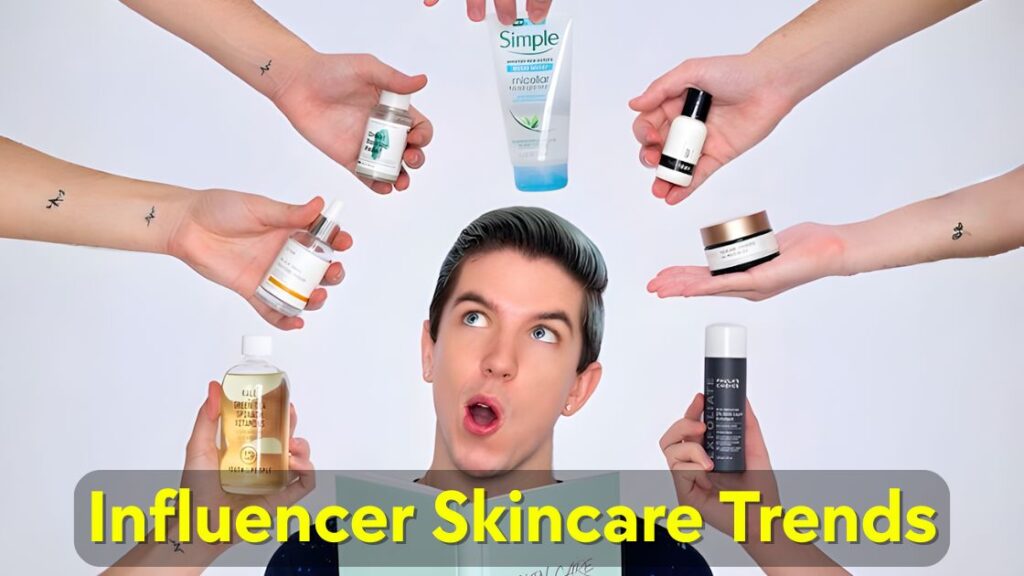
One evening last year, a friend messaged me: “I’m doing the 12-step nighttime glass skin routine everyone on TikTok uses. My face is peeling.” She sounded frustrated, tired. I smiled at the screen. I’d been there too. We chase the perfect routine, stack every serum we see, and sometimes end up with skin that rebels.
In this post, I want to walk with you through some of the most viral skincare myths circulating on Instagram, TikTok, YouTube, those routines Gen Z often believes and pit them against what dermatologists, clinical evidence, and real skin tell us. No judgment. Just clarity. If your skin’s whispering that something feels off, you deserve to know why and how to adjust.
How we got here: why influencer myths spread so fast
It helps to see why some myths gain traction:
- Short format, big promises ,15- to 60-second videos demand bold claims (“erase wrinkles overnight”) more than nuance.
- Aspirational visuals, glowing skin, viral transformations, before/after content make the myth feel reachable.
- Lack of credentials & checks, many influencers aren’t dermatologists. Misinformation spreads when no one verifies. A dermatologist blog cautions that many beauty myths are perpetuated by influencers lacking formal training.
- Peer pressure & FOMO, when everyone around you tries a trending routine, it feels safe to jump in. But safety in numbers doesn’t equal correctness.
- Algorithm amplification, platforms tend to boost content with high engagement, and dramatic or extreme claims often get more attention.
Dermatologists now monitor “skinfluencer” culture closely. Some qualified physicians themselves try to counter misinformation in short video form, but the sea of unvalidated tips is deep.
A recent news report notes that viral routines, especially on TikTok, are causing a surge in skin damage among young users who overuse potent ingredients.
Myth vs Reality: Common Influencer Skincare Beliefs
Below are several widely shared myths, what Gen Z often thinks, and what experts/studies say.
Myth 1: If a serum gives “peel effect,” it’s working better
What many believe: If your face tingles, peels, or feels “tight,” that means it’s doing deep work exfoliating, renewing.
What dermatologists say: Irritation, peeling, and burning are often signs of barrier damage, not efficacy. A viral scrub or acid burn is not better skin. Overexfoliation weakens the skin’s barrier and can lead to sensitivity, disruption, redness, and longer recovery times.
Better: gentle exfoliation with measured frequency, respecting skin’s signals.
Myth 2: More products = faster results
What many believe: Stacking layers of cleansers, toners, essences, serums, and ampoules will accelerate transformation.
What dermatologists say: Simplicity often outperforms complexity. Excess layering can cause interference, ingredient conflict, and sensitisation. A constructive recommendation by dermatologists: stick to a basic cleanser, moisturiser, sunscreen, then add actives only if needed.
As Real Simple recently reported, dermatologists caution that many influencer-backed scrubs, toners, oils, and wipes layered all at once may harm skin more than help.d
Myth 3: Natural = safer / always better
What many believe: If it’s “plant-based” or “clean”, it must be safer and better for skin.
What dermatologists say: Natural ingredients can still trigger allergies or irritation. Terms like “natural,” “organic,” and “clean” are often used in marketing with no standardised regulations. There’s no guarantee they’re safer.
Dermatology sources caution that relying purely on “natural” labels may backfire.
Myth 4: If you don’t feel it working, it’s not working
What many believe: No tingling? No magic. No noticeable immediate effect? It’s not doing much.
What dermatologists say: Many effective actives operate gradually, often without dramatic sensations. Absence of a “sting” effect doesn’t mean zero effect. In some cases, stinging is a red flag, not a sign of potency.
Myth 5: A viral routine that works for one skin type works for every skin type
What many believe: If that “pink gel + brightening mask + cleanser” worked for someone, it’ll work for me too.
What dermatologists say: Skin is highly individual; genetics, environment, barrier conditions, and sensitivities matter. What’s my miracle for one could flare others. Many dermatologist sources warn that copying routines blindly invites problems.
Myth 6: You can use many strong actives safely if you patch test
What many believe: A little test means it’s safe to layer it across your face.
What dermatologists say: Patch testing helps, but it’s not foolproof. A spot test doesn’t replicate full-face reactions, cumulative interactions, or barrier fatigue. Many adverse reactions occur after a few days, especially when multiple actives combine.
Myth 7: Viral hacks (banana peels, ice cubes, microneedling at home) are safe and effective
What many believe: If a hack is trending, it must have value (e.g. rubbing a banana peel for tightening, DIY micro-needling).
What dermatologists say: These hacks often lack oversight, safety data, and may injure skin. Experts warn against DIY extremes and unverified shortcuts.
For example, the viral “caveman method” (avoiding all skincare) was recently criticised by dermatologists, who pointed out that skin needs cleansing, protection, and supportive care, especially in polluted environments.
Real Stories: Where I Got Fooled & Learned
A few years ago, I hopped on a 5-product layering routine I saw from a trending influencer: a foaming cleanser, a pH toner + AHA, vitamin C, a retinol, and a sheet mask nightly. That week, I felt tingling, an odd texture, and breakouts in places I rarely break out.
I paused everything except a gentle cleanser and basic barrier cream for 10 days. The difference: my skin calmed, the sensitivity reduced, and when I reintroduced only vitamin C and a gentle moisturiser slowly, my skin tolerated it better than before.
I also experimented with the “ice roll hack” (rolling ice on the face for a glow). The first day, it felt refreshing; the next day, my cheeks were irritated and red. Lesson: novelty ≠ safety.
Many peers have confided that when they tried the full “routine stack,” they ended up needing dermatology-level care. The lesson I carry: your skin’s peace is more valuable than chasing every trend.
How to Navigate Influencer Claims Wisely
Here’s how to stay sceptical but open, build a routine you trust.
1. Check credentials & disclaimers
If someone isn’t a dermatologist, aesthetician, or scientifically trained, treat their “advice” as ideas, not rules.
2. Demand evidence, not hype
Look for before/after studies, published data, reputable sources, not just testimonials.
3. Introduce changes slowly
Add one new product or activity at a time, with gap days. Don’t push all trends at once.
4. Watch your skin’s signals
Tingling, burning, persistent redness, and flaking are alerts. Back off when your skin says no.
5. Prioritise fundamentals
Cleanser, moisturiser, sunscreen, these are the anchors. Everything else is secondary.
6. Avoid stacking strong actives together
Use retinoids, acids, and brighteners on different days or time slots when possible.
7. Treat marketing claims skeptically
“Glow,” “peel effect,” “snapback”, these are catchy terms. Look past marketing packaging.
8. Use patch testing, but don’t trust it fully
Patch tests help, but aren’t perfect. Always monitor full facial use.
9. Be generous with rest days
Skin heals best with breathing time.
FAQs (People Also Ask)
1. How do I tell which influencer advice is trustworthy?
Check their credentials (are they dermatologists or qualified in skin health?), sources cited, transparency about sponsorships, and whether they balance claims with caution.
2. Can TikTok routines damage my skin long-term?
Yes, dermatologists have warned that viral routines, when misused, result in barrier damage and sensitivity in young users.
3. Is it bad to follow skincare influencers?
Not inherently. But do so with critical thinking: test slowly, prioritise fundamentals, and don’t chase every trend.
4. Why does a routine that worked for someone else fail for me?
Because everyone’s skin is different, genetics, barrier health, environment, and sensitivities all vary. What’s a miracle for one may be trouble for another.
5. Should I always avoid internet hacks?
Avoid risky ones (DIY strong acids, microneedling at home). Mild hacks like using cold water or a gentle massage are usually safer. Always research and test.
6. How many steps are too many in a routine?
There’s no magic number, but when you’re layering multiple strong actives daily beyond cleansing, moisturising, SPF, that’s a red flag.
7. Can influencers’ claims ever be valid?
Yes, many promote valid products or activities. But always verify with evidence and balance.
8. Do dermatologists ever use influencer formats (short videos)?
Yes, some dermatologists are becoming “dermfluencers,” using short videos to deliver evidence-based advice.
9. What should a basic Gen Z skincare routine include?
Cleanser, gentle moisturiser (non-comedogenic), sunscreen. Add a single active (like vitamin C or retinol) gradually and use rest days.
10. How to recover after trying a viral routine gone wrong?
Pause all activities. Use gentle, barrier-supportive care. Reintroduce slowly one product at a time. Treat with kindness.
Final Thoughts
Influencer skincare myths are seductive; they promise fast fixes, glowing results, and a shortcut to radiant skin. But your skin is not a project to experiment endlessly on. It’s a living organ that needs consistency, respect, and gentle care. When you feel tempted by the next viral promise, ask: Is it safe? Is it necessary? Is it sustainable?
Your wisest moves will always be rooted in listening to your own skin, seeking credible sources, and building a routine that lasts, not one that burns you out.
TL;DR Summary Box
| Myth Influencer Says | What Dermatologists Actually Say |
|---|---|
| More products = better results | Simpler routines often healthier |
| Natural = safer | Natural can still irritate |
| If it stings, it’s working | Stinging often signals irritation |
| Viral routine fits all | Skin is individual; copy carefully |
| Hacks always harmless | Many are unverified or risky |